Was the
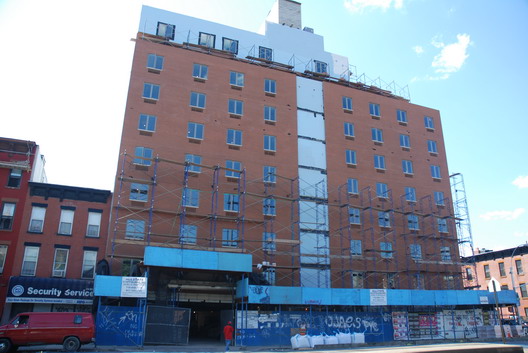
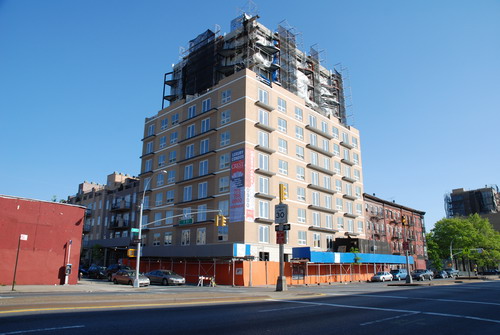
rezoning of Fourth Avenue in Park Slope seriously flawed? We'd argue that it was in several respects, in particular in that it allowed tall (for Park Slope) buildings without requiring any affordable housing. Yesterday, Normal Oder tackled the subject in a very extensive and thoughtful
item on his Atlantic Yards Report.
The upshot of the story is that the Fourth Avenue rezoning, which has led to
significant new construction, highlights flaws in the city's affordable housing strategy. While there are serious issues about the extent to which the Williamsburg/Greenpoint rezoning has promoted affordable housing--and the evidence is that it is doing so somewhat along the waterfront, but not in other parts of those neighborhoods--the city didn't pursue affordable housing incentives at all on Fourth Ave. (There is an argument to be made that affordable housing is best
required in neighborhoods like Williamsburg and Greenpoint where development will happen regardless, but that is an issue for a different post.)
In any case, Mr. Oder wrote:
In hindsight, the rezoning of central and northern Park Slope seems an unwise move, favoring some powerful constituencies—homeowners in an affluent district, real estate developers, and an unbending city administration—without requiring commensurate equity. Now luxury buildings have sprung up along Fourth Avenue, replacing light industrial buildings and three-story apartments, and previous residents have been displaced. Developers—and the people from whom they bought property—have reaped the benefit.
Interestingly, the person that Council Member Bill de Blasio appointed to Community Board 6 as part of the Atlantic Yards Massacre a couple of weeks ago, is Brad Lander of the Pratt Center for Community Development, who will chair the Housing Committee and is an advocate of affordable housing.
It's significant in more than an academic way, as CB6 will clearly have hand in the shape of the Gowanus rezoning, both in terms of what areas are rezoned for housing, the densities that are allowed and the extent to which affordable housing is addressed and how.
Related Post:Fourth Avenue: A New Development Every Three BlocksLabels: Fourth Avenue, Rezoning, Urban Planning