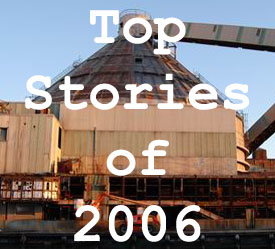
When a future generation of historians looks back at Brooklyn from the vantage point of the 2020s or 2030s, 2006 will stand as
a watershed year. Symbolically, it will be
as important as 1957, the year that the Dodgers played their last game at Ebbets field, precipitating a tailspin--at least in terms of self-esteem, if not reality--that lasted for decades. The story of 2006, of course, isn't deterioration and loss of institutions and industry. It's one of of a real estate and development boom of historic proportions. Yet,
the prevailing 2006 theme is still one of loss--of landmarks and of character and of things that make Brooklyn, well, Brooklyn.
This is the year that Brooklyn started to change forever. It seemed that hardly a week went by when a building wasn't being demolished or the columns of a new one weren't starting to poke into the sky. As surely as the decline of the late 1950s started to make Brooklyn what it would be in the 1960s, 1970s and 1980s, the boom of 2006--and some critical decisions that were made this year--will define what Brooklyn will become in the 2010s, 2020s and beyond. Some say it's a great thing. Other, a lot less so.
In either case, we'd suggest that 2006 was a seminal year for our borough, and these are
a few of the stories that made it so (knowing we've left out some significant ones):
1) Atlantic Yards. After an approval process that was not noted for its inclusiveness nor for being especially responsive to community concerns, the mega-project that will forever change the intersection of Flatbush and Atlantic Avenues--along with Propsect Heights, Park Slope, Fort Greene and Boerum Hill--
was approved. The lawsuits are still to be decided, of course, and could turn out to be one of the big stories of 2007. Or not.
2) Greenpoint Terminal Market Fire. One
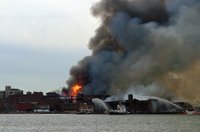
of the
biggest fires that Brooklyn has seen in recent decades is said to have been started by
a drunk scavanging for copper wire. We're still a little dubious, but all we know is that structures that might have been landmarked were turned to rubble instead.
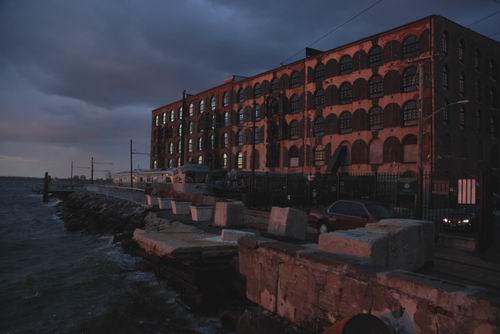
4) Todd Shipyard Demolition. Ikea's big blue box on the Red Hook waterfront--a project that will add up to 10,000 cars a day to the neighborhood--moved into the construction phase in 2006 with the
demolition of the vast Todd Shipyard, including a large number of historic buildings. The
Graving Dock--a Brooklyn waterfront asset--remains but is threatened with being filled for use as Ikea parking.
Lawsuit is pending.
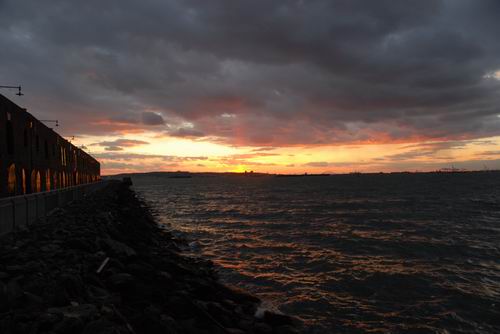
5) Start of Williamsburg Waterfront Construction. The fate of a huge
stretch of waterfront in Williamsburg and Greenpoint was actually determined with an historic rezoning in 2005, but 2006 saw the start of the first major project to result from the change. Called
Northside Piers, the first 29-story Toll Brothers tower is now rising on Kent Avenue. Construction of The Edge, another highrise project to the north, should start next year.
6) Brooklyn Bridge Park. The courts cleared the way for construction of
Brooklyn Bridge Park, which will be financed with luxury highrise housing and hotel development. The project will open the waterfront to the public, but also change significantly change it by adding a number of very tall buildings.
7) Coney Island Plan/Sale of Astroland. Developer
Joe Sitt's plans for Coney Island
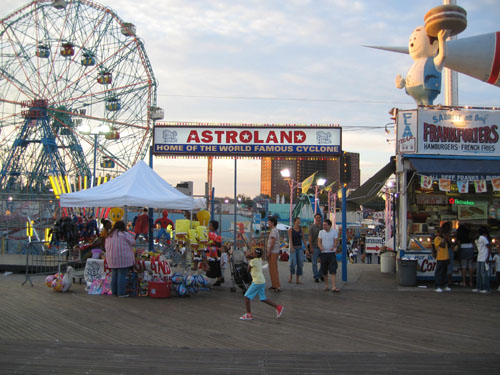
continued to develop with a
number of iterations making the rounds in 2006. Most significantly, Mr. Sitt
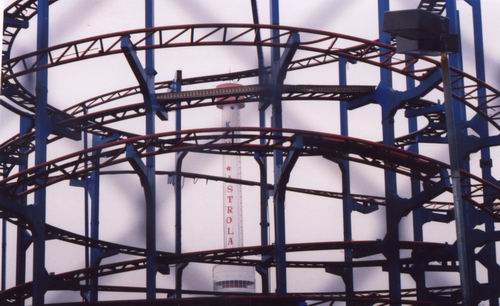
purchased Astroland, which will close at the end of the 2007 season, and began the process of evicting tenants on land he's already bought, making 2006 the last year before a long period of demolition, emptiness and construction. It remained very difficult to know what to make of the Coney plan, although Thor is best known as a developer of urban shopping centers and its Coney plan includes up to four 40-story highrises along the boardwalk.
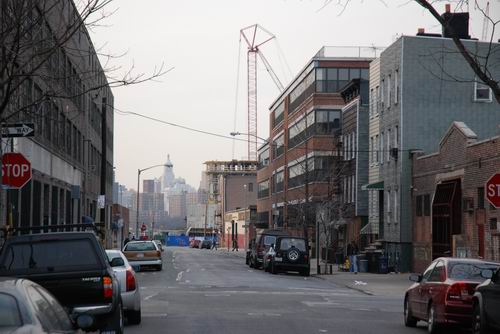
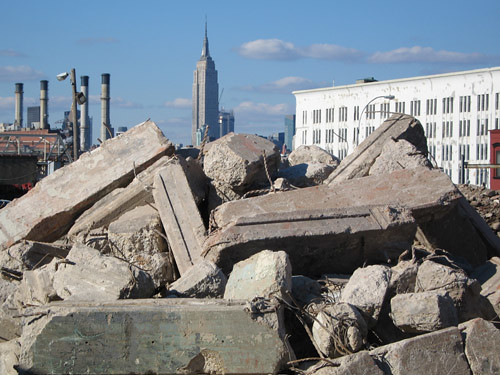
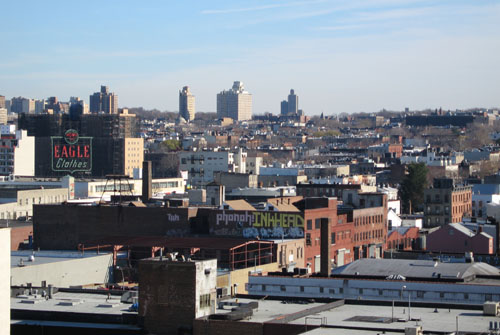
8) Williamsburg as a Demolition Zone/Construction Site. 2006 was the year that Williamsburg became a
largescale demolition and construction zone. Buildings seemed to be going down and foundations dug on every block. 2007 will the year that the changes in the landscape--and in the neighborhood's character--become apparent.
9) South Slope Development Fights. Beat the downzone was the name of the game in one of Brooklyn's hottest development zones. There were
multiple smackdowns at the Department of Buildings.
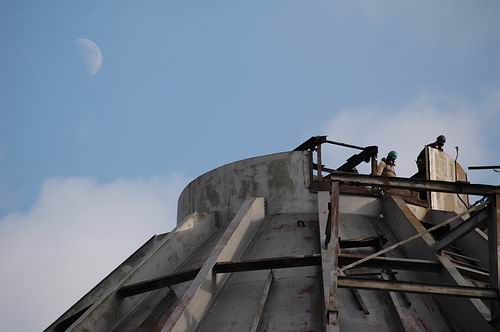
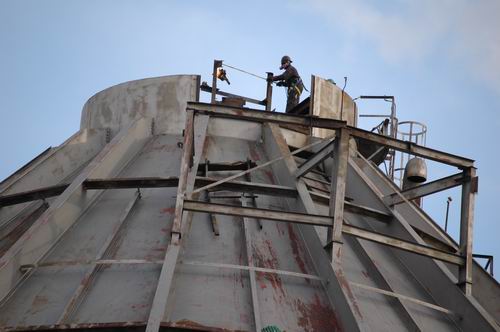
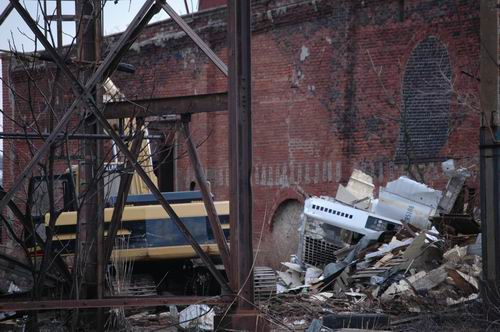
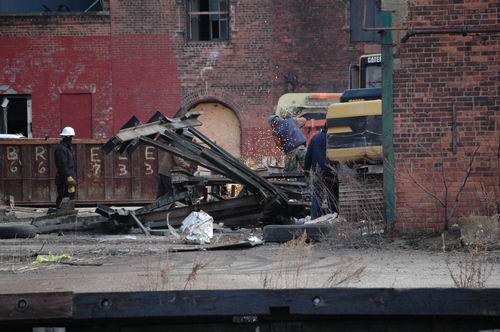
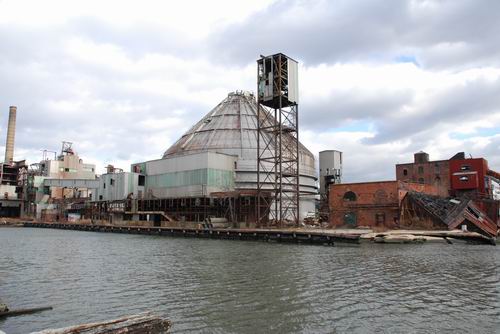
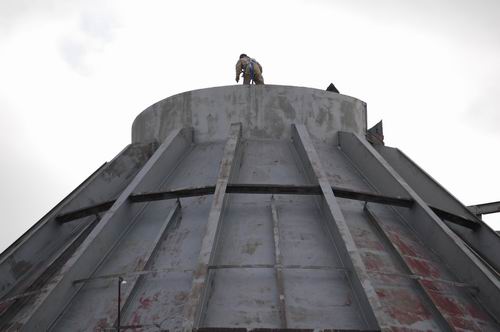
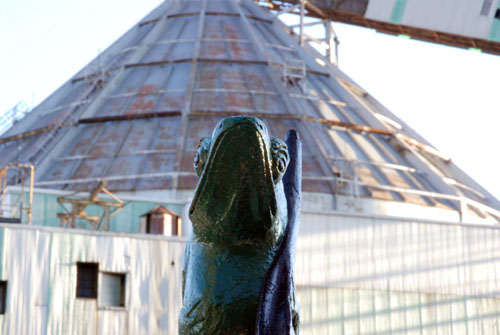
10) Revere Sugar Demolition. The Red Hook waterfront lost one of its icons--a dev

elopment deeply mourned by some and less so by others--at the hands of developer Joe Sitt and his firm Thor Equities, which became of the more controversial presences on the Brooklyn scene in 2006. As the year comes to an end,
so does the Revere Dome. The developer had originally said he might preserve the dome, but demolition went ahead without any community notification or any zoning changes needed or approved plans.
 On Friday, we posted several year-end wrap ups. We'd love for you to check them out if you already haven't, so we're (again) including links in an item at the top of today's posts in case you don't feel like scrolling down. We thank you for reading during GL's first year of life. We have big plans for 2007 and promise you that we'll have a lot more, much bigger and way better as we close in on the ripe old age of one. A huge and heartfelt thank you to all who read, leave comments, send emails and provide encouragement. And, of course, to all the bloggers who link to our items and help get the word out. I can't list you all, but special thanks to Curbed, Gothamist, Brownstoner, Brooklyn Record, Daily Intel, OTBKB, Sunset Parker, Kinetic Carnival and Z. Madison to name a few. If we left you off the list, please don't take umbrage!